
Lockdown and the Mafia
How Covid gave the Mafia new opportunities.

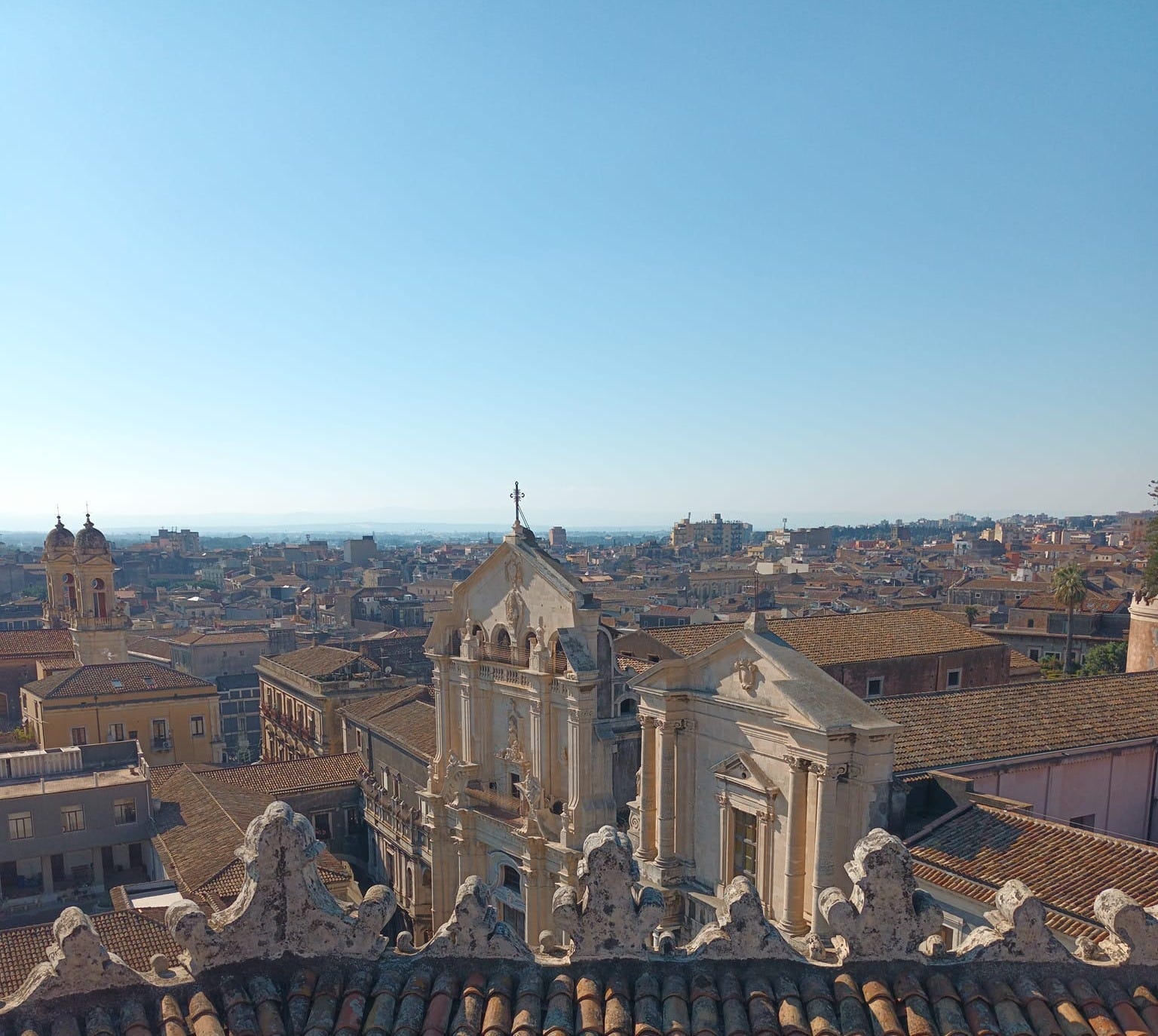
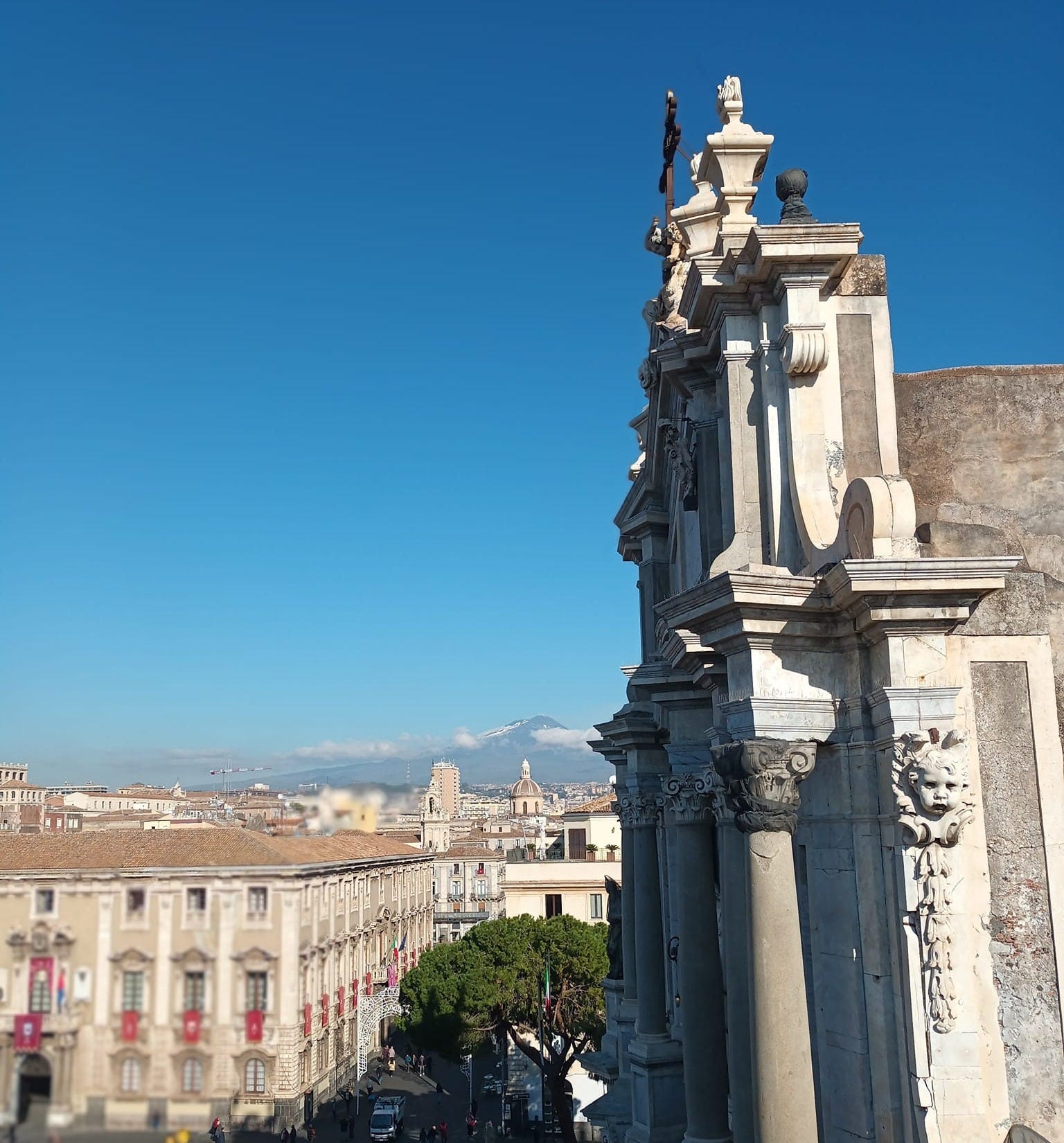
There are certain things you have to get right when writing a novel. One is geography, particularly urban geography. A sense of place is a great help, and consulting a map when you write is sometimes very useful. You don’t want to say that your hero walked down the road, you want to say which road, and which landmarks he passed, and what he might have seen along the way. That is why the city of Catania is such a gift to the writer. It has some wonderful landmarks - the Elephant, the lovely Cathedral and University squares, the Post Office, the Villa Bellini, the long via Etnea with the volcano in view at its end. How many cities can boast such a view? I can’t really think of anything that says ‘London’ for example in the way Etna sums up the spirit of Catania. But all the geography is merely background to the characters and the plot; it should not be intrusive, and it should be only lightly sketched in. The heart always sinks when you pick up a book where the author declares the setting in some place has become a character in the book itself. We want to read about people, not London, or Catania or Moscow.
The other thing that needs to be got right is the time scale. You may not know this - it is so skilfully done that you do not notice it is there, though you would if it were not - Pride and Prejudice has a very carefully worked out chronology, and scholars are able to date each of the events described in the book. Someone has even worked out the year, deducing it from the days of the week and the dates mentioned. Nowadays it is so much easier to do this than previously, as one can, with a single Google search, summon up the calendar for the year one is writing about. Hence one can find out on what day Easter Sunday fell that year, and with another Google search, remind oneself who was the Prime Minister of Italy at the time, and which team was playing which in the stadium in Palermo that weekend. All of this gives a verisimilitude to thebackground, structure to the plot, and a hint of realism. All my books in The Chemist of Catania series are precisely dated, as are the characters’ ages. The series starts with Calogero aged 16, and Berlusconi as Prime Minister, in the Noughties. I have now, in the volume I am currently working on, reached the fateful years of 2019; and that was the year that Covid-19 started, which reached Italy in the early days of 2020, leading to the first lockdowns in February 2020. What this means is that the plot of the next book is going to have to deal with Covid.
Covid is, I admit, kinda boring, or at least it was to live through. However, there are two interesting facts, not about Covid, but about lockdown.
First of all, despite all the restrictions placed on work and movement of people, the cocaine kept on flowing with some discernible but relatively minor interruptions. Given that it is not produced in Europe, and had to come a long way from South America, crossing many borders, and that so many international flights ceased, that was quite an achievement. So, while in Italy in lockdown no one was allowed to leave their commune, and some communi were actually barricaded off by the police, nevertheless, the smuggling routes carried on regardless, or new methods were found. One such was to send the cocaine by post, in Amazon-style deliveries. Has your Amazon parcel ever been inspected by the police? Quite. The forces of law and order were effective in locking down law-abiding citizens, but not so much with criminals.
So, a lot of cocaine did get through to its consumers despite lockdowns; the smugglers developed new ways of smuggling, that is all. If less cocaine got through, that meant that the price went up, given that the demand did not go down. So the criminals continued to make a fortune.
This is the second thing: lockdown did not lead to a drop in demand for cocaine but the opposite. Here, I admit, I am speculating, as the criminal gangs do not publish annual reports, but it does seem reasonable to assume that people locked in their houses, bored, with nothing to do, simply longed for their drug of choice, and were prepared to pay more for it when dealers claimed there was a shortage. Moreover, as soon as lockdown was lifted, more cocaine flooded in and there was a rise in consumption due to the pent-up demand.
These two factors meant that the drug dealers had a bonanza thanks to lockdown and its aftermath. Of course, other activities such as street crime (never very profitable) ceased, but the most profitable of all did not.
The other opportunity that arose during lockdown was the opportunity to exploit the attendant financial crisis. The Mafia has liquidity, and people looking for loans will find them easier to approach than banks - for a reason; a Mafia loan may be impossible to ever pay back. (This article has details, as does this one.) This means that the Mafia would have used Covid as a wonderful opportunity to swallow small businesses, and use them for money-laundering purposes.
There were also reports of the Mafia distributing food parcels to the hard up in lockdown, and these reports are highly credible. Firstly, it cements the vital narrative that the state cannot get things done, but the Mafia can; and it creates a culture of favours and debts on which the organisation thrives. It gives the Mafia the entrée into thousands of innocent families.
Covid brought the Mafia new opportunities in the the places they traditionally operate, and the prisons were no exception. There is a long but worthwhile article here about how Italy’s prisons broke out into a seemingly spontaneous rebellion on the eve of the first lockdown. For three days, the Italian state lost control of its prisons and the nation watch in horror as mass escapes took place, coupled with the destruction of buildings by fire. Was this the Mafia flexing its muscles, showing who was really in charge? This video show you what happened:
What followed was even worse. Because of the danger of infection, the state began to release quite a few Mafia bosses. Needless to say, this provoked public fury, and eventually led to the resignation and/or sacking of a few officials, unusually.
So, taken all together, the lockdown made the government of Italy look stupid, and gave the Mafia huge opportunities to expand its hold on places like Palermo. Unintended consequences….. And in the meantime, I have quite a few ideas for my characters in lockdown.
PS To buy The Chemist of Catania, the first in the series of my Mafia novels, follow this link. To read the latest in the series, The Peace of Palermo, go here.