
Reflections on "The Wire"
Maybe the best television series of all time.

I have just finished watching all five seasons of The Wire on DVD, and if you will allow me a little excursus from things Sicilian, I have a few thoughts on what is supposed to be the best television series of all time.
First of all, it is very very good, and if you have not seen it, please do. It is not available on any streaming channel I know of, but buying the DVD box set is worth it.
The creators of the show made some bold choices and these certainly paid off. (There’s no achievement without risk, after all, in art as in life.) The setting in Baltimore was made as all-embracing as it could be; one need never visit, as one has seen it all now. It is not pretty, but it is real. This is true of the language, as most of the characters speak a sort of local patois, which eventually you pick up - you feel me? The same goes for the music, the to my mind hideous sound of rap. All together, this makes for a complete work of art. This is not set in Baltimore, it is Baltimore.
The casting was bold too: the majority are African-Americans, many of them young first timers. Some of the performances were tours de force. Proposition Joe, for example, a mountain of a man, and the flamboyant thief and mass murderer Omar. By no means admirable people, but likeable and fascinating, and quite original, being unlike most of the ‘characters’ you encounter on television.
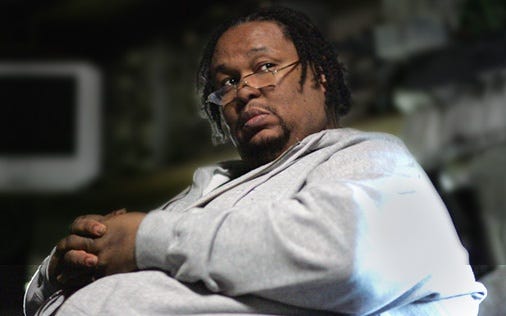
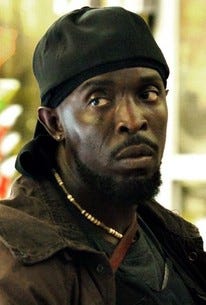
In any drama, character is key, for character is plot. You really want to know what is going to happen to Omar and Prop Joe, and that is what keeps you watching, sometimes on the edge of your sofa.
The show also made a bold choice in making its lead character, Jimmy McNulty, played by British actor Dominic West, a really unpleasant fellow, dishonest, drunken and a serial deceiver. But at the end, you rather see his point. Baltimore made him.
The series does have a moral message, and it is this, that the system is broken: politicians, police, even evangelical ministers, all are somehow or another compromised. Only at the end does a man of principle emerge. These are what Saint John Paul II called ‘structures of sin’, the system that builds up thanks to a series of bad personal choices. Personal sins smooth the path of those who come later, making sin the easy way to follow. It would be wrong to dismiss this insight as ‘woke’. The good character who emerges at the end points to the way the police department is obsessed with statistics and massaging the figures as the fount of all their woes. He is surely right. As does the other good character, Major Colvin, who sees that the legalisation or toleration of drugs is the only possible way forward.
The two most loveable characters are Bubbles and Prez. The first is an addict who finally finds the strength to become clean; the second a not very competent policeman who retrains as a teacher. The lesson here is that addicts need to discover a sense of personal responsibility; perhaps the current strategy of trying to stop drugs at source is the wrong way round: we should be targeting the users, not the suppliers. And education is key. Which leads us to the conclusion that drug abuse is the fruit of social breakdown, rather than its cause. As in Sicily, so in Baltimore: in the world of The Wire, there are no good fathers, no good husbands. That tells you something.
Fr. Alexander--Your series of novels could be adapted very well into a euro-version of this unforgettable series. "Just saying.."